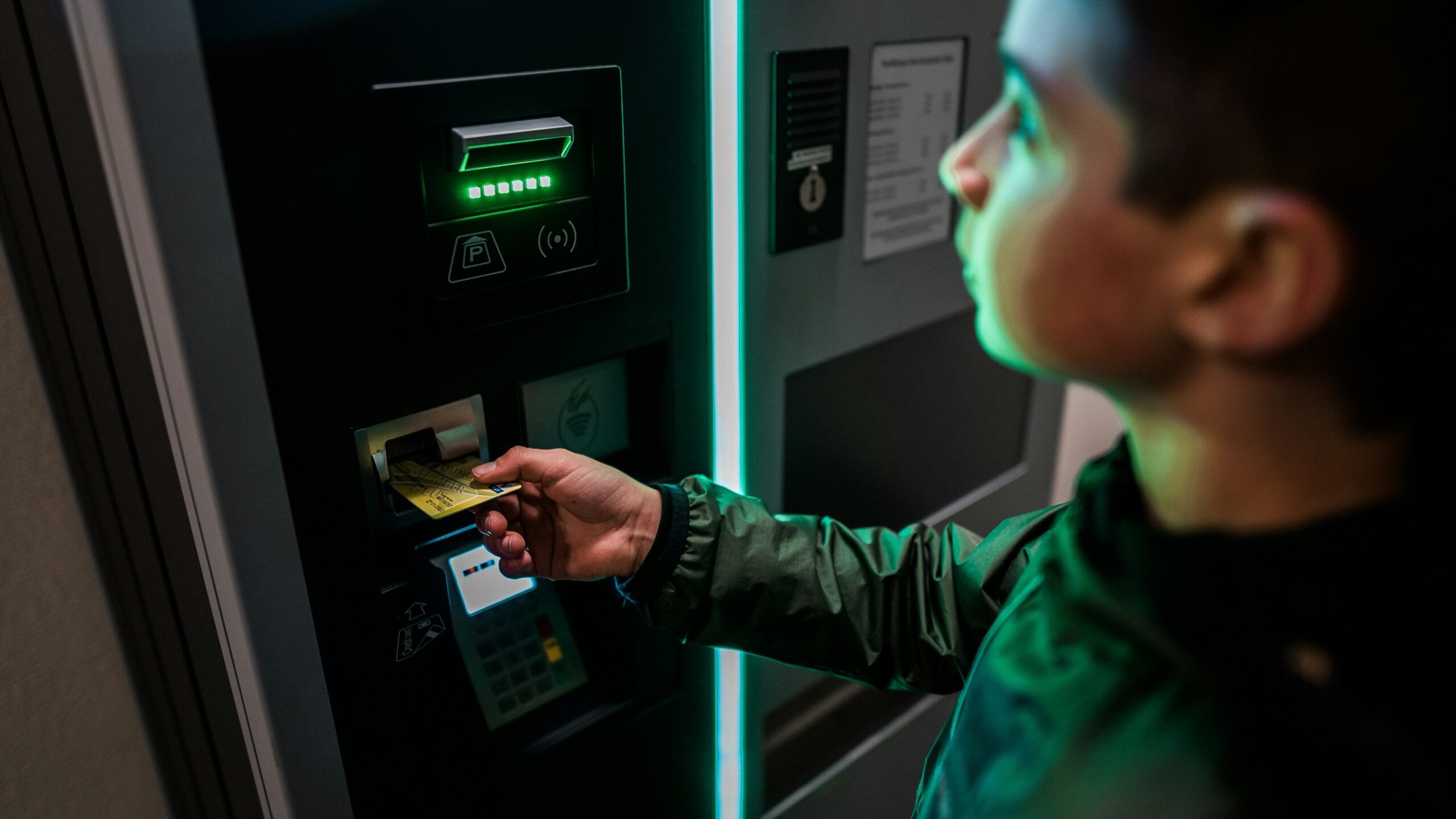
The morning ritual for millions in 2026 is no longer just a cup of coffee and a glance at the markets. It involves a silent, seamless exchange of data that would have been unthinkable a decade ago. As you sip your espresso, your smart ring transmits a detailed cardiovascular readout—heart rate variability, sleep quality metrics, even subtle stress indicators—to your bank’s secure analytics engine. This isn’t a dystopian overshare; it’s the cutting edge of biometric banking, a profound convergence where personal health data is becoming the ultimate currency of trust, reshaping everything from loan approvals to fraud prevention. The financial institutions leading this charge are no longer just money managers; they are becoming holistic guardians of client well-being, leveraging physiological insights to craft unprecedented levels of security and personalized service.

The New Frontier: From Authentication to Risk Assessment
For years, biometrics in finance meant static fingerprints or facial recognition for login—a sophisticated key, but a key nonetheless. The paradigm shift in 2026 is the move from authentication to continuous assessment. Banks and premium fintech platforms are now integrating with a suite of FDA-cleared wearable devices and at-home health monitors, with explicit user consent, to build dynamic financial profiles.
“We’ve moved beyond asking ‘Are you who you say you are?’ to understanding ‘Are you in a state consistent with your normal financial decision-making patterns?’” explains Dr. Anya Sharma, a former neuro-economist now heading biometric strategy at Global Trust Bancorp. “A sudden, anomalous spike in stress biomarkers coinciding with a large, atypical wire transfer request can trigger a secondary, human-in-the-loop verification. It’s a protective measure, not an intrusive one.”
Practical Applications: Insurance, Lending, and Wealth Management
The applications are moving from pilot programs to core offerings. In personalized lending, for instance, a borrower with consistently optimal sleep patterns and managed stress levels, as verified by their wearable data, might be offered a marginally lower interest rate on a mortgage. The rationale is data-driven: individuals with disciplined health metrics statistically demonstrate lower risk profiles in long-term financial commitments.
In the realm of high-net-worth wealth management, the integration is even more nuanced. Advisors at firms like Prestige Capital Advisors use aggregated, anonymized health trend data (with strict privacy firewalls) to gauge client risk tolerance in real-time. A portfolio rebalancing discussion might be gently postponed if a client’s biometric data indicates a period of high stress, ensuring decisions are made from a place of clarity rather than reactivity.
The Privacy Paradox: Navigating the Ethical Minefield
This evolution is not without its profound ethical and regulatory challenges. The collection of such intimate data creates a privacy paradox: consumers seek hyper-personalized security but are wary of creating a corporate panopticon. The regulatory landscape in 2026, shaped by enhanced versions of GDPR and new laws like the U.S. Biometric Data Privacy Act (BDPA), mandates “purpose-specific consent” and “right to algorithmic explanation.”
“Transparency is non-negotiable,” states Marcus Chen, CEO of the privacy-first fintech Vault Health Finance. “Our clients don’t just grant blanket permission. They control sliders: ‘Yes’ to using sleep data for fraud detection, ‘No’ to sharing activity levels with our investment algorithm partners. The data is encrypted, often processed on the device itself, and never sold.” Leading institutions now employ chief ethics officers specifically to audit these biometric programs, ensuring they don’t inadvertently discriminate based on health conditions—a modern extension of fair lending laws.
Security Architecture: Building the Unhackable Vault
The technical backbone of this system is what makes it viable. Health data is not stored in a central repository but is tokenized and used to create a constantly evolving “live key.” A behavioral biometrics engine analyzes micro-patterns—typing cadence, mouse movements, even gait when using a mobile banking app—and cross-references them with physiological data. A fraudster might steal a password and a static fingerprint replica, but they cannot replicate the unique, holistic biometric rhythm of the legitimate user in real-time. This multi-modal approach is the cornerstone of what security firms now call ambient financial security.
The Commercial Landscape: High-Value Services Emerging
This convergence has spawned a new ecosystem of premium financial services. For the discerning client, it’s no longer about just a premium rewards card with airport lounge access; it’s about integrated wellness-financial packages. Imagine a platinum-tier banking relationship that includes an annual comprehensive health screening, the data from which directly optimizes your life insurance premiums and retirement health cost projections.
Furthermore, concierge cybersecurity services for ultra-high-net-worth individuals now include biometric monitoring as a core feature. If a system detects biometric signs of coercion (e.g., elevated heart rate and stress hormones during a login sequence paired with anomalous transaction patterns), it can silently alert a private security team while displaying a fake “system down” message to the user under duress.
Key Takeaways for the Informed Consumer in 2026
- Consent is Granular: You are in control. Reputable institutions offer dashboard toggles for each data type and its specific use.
- Look for Federated Learning Models: The most secure systems train their AI on your device, sending only encrypted insights, not raw health data, to the cloud.
- Ethical Underwriting is a Benchmark: Inquire if the bank’s biometric risk assessment algorithms are audited for bias against chronic health conditions.
- Value Exchange is Clear: The best programs offer tangible benefits—better rates, enhanced security, personalized financial planning—in return for data sharing.
The Horizon: Integrated Wellbeing and Financial Health
As we look beyond 2026, the convergence points toward a fully integrated model of wellbeing. Pioneering holistic financial planning platforms are beginning to incorporate nutritional data, mindfulness app usage, and genetic health risk profiles (with stringent consent) into long-term retirement capital allocation strategies. The line between a financial advisor and a health advisor is blurring, with the client’s holistic prosperity at the center.
The promise is a financial system that is not only vastly more secure but also more empathetic and personalized. It recognizes that our financial decisions are not made by logic alone, but by living, breathing humans whose physiological state matters. The challenge for the industry will be to walk the tightrope between groundbreaking protection and invasive surveillance, guided by robust ethics and transparent value. In this new era, the greatest asset a bank can safeguard may not just be your wealth, but your well-being.
Conclusion
The fusion of health data and financial security is no longer speculative fiction; it is the operational reality of 2026’s most forward-thinking financial institutions. This shift represents a fundamental redefinition of the client-bank relationship, built on a continuous, consent-based dialogue of data. While the privacy concerns are significant and demand vigilant oversight, the potential benefits—from near-impenetrable security to financial products that genuinely adapt to our human rhythms—are transformative. The future of finance is not just digital; it is intimately, and responsibly, biological. For the informed consumer, navigating this new landscape requires a keen understanding of both the technology’s power and the paramount importance of controlling its use, ensuring that the vault of the future protects not just our money, but the very essence of our personal sovereignty.
Photo Credits
Photo by Timeo Buehrer on Unsplash

•
Leave a Reply